


The text was originally published in the brochure of the exhibition by Primož Bizjak entitled The Grey World is Blue and Green that took place between 16 May and 24 August 2025 at the City Gallery of Piran [Obalne galerije Piran].
Primož Bizjak’s photographs represent carefully selected spaces of the contemporary cultural landscape, while his ideas and senses are primarily related to painting. Although a painting is the result of manual work and is essentially completely constructed, while photography is the result of a mechanical process that faithfully records a certain part of reality captured in time and space, it is possible to find similarities between these two, at first glance, diametrically opposed principles of image making. The structure and intention of Bizjak’s works always reflect the conceptual and executional principles of painting. Namely, he seeks his motifs in a long-term process of intensive observation, thoughtful and precise framing, the search for the ideal light conditions, and the final making of a photographic image. With photographs, at the end of this long-term process, he conjures up the effect of monumental painting, which is reflected in the formal approach, structure, composition, conceptual framework, and general atmosphere.
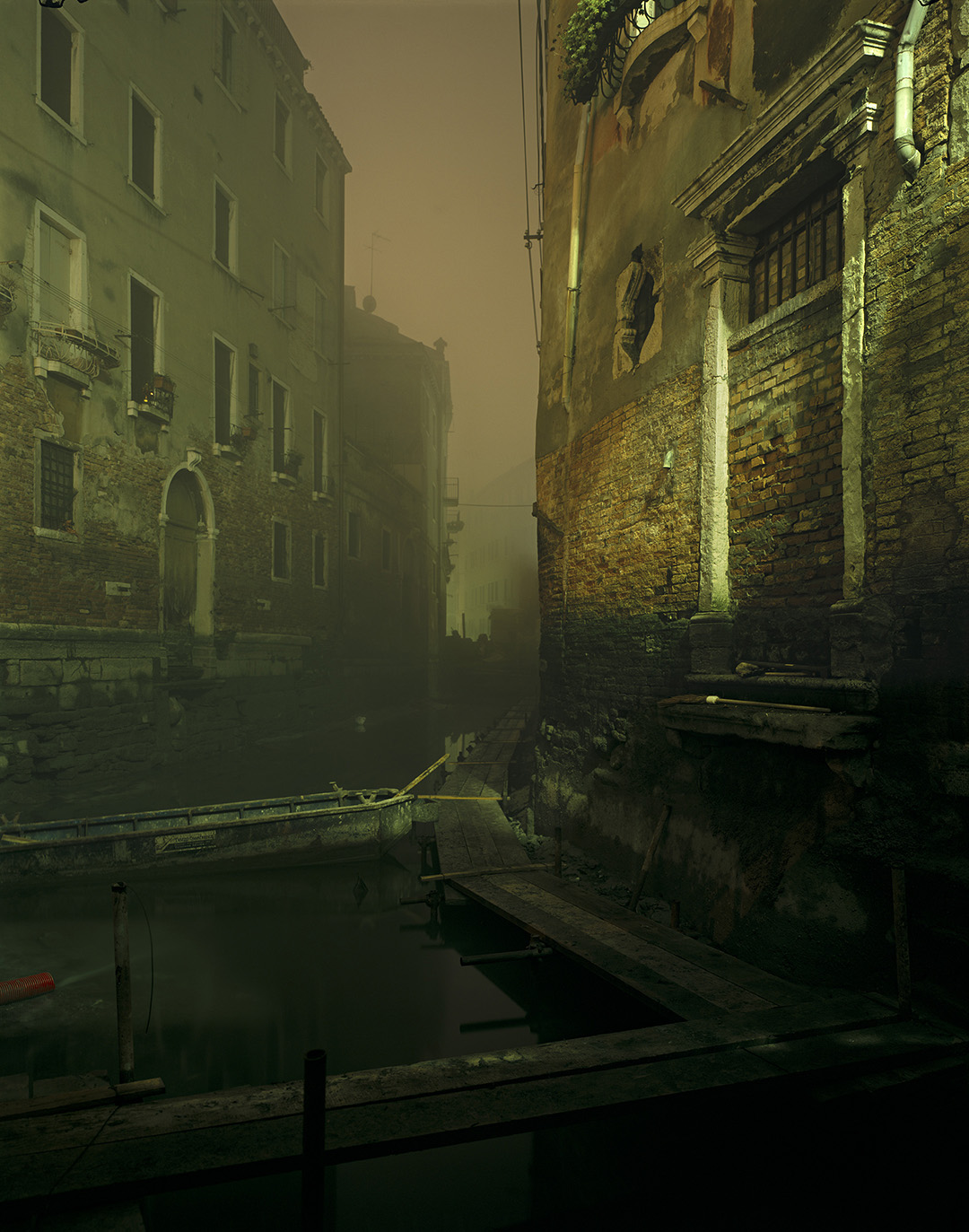
Primož Bizjak, Rio di San Marquola No. 2, Venezia, 2005. 158 x 125 cm. Courtesy: Primož Bizjak & Gregor Podnar Gallery.
Fragments of everyday life bring to the fore spaces and objects that are devoid of human figures, but at the same time, signs of human presence can undoubtedly be detected in them. The photographs mostly show anthropogenic structures that are the result of human labour and civilisational progress – an idea that has deeply marked recent history. However, the idea of continuous progress has been questioned for several decades, as global society is now faced with new challenges, such as tectonic changes in natural ecosystems, which are largely caused by human presence and activity on the planet. With its artificial structures and insatiable mentality, the humankind is increasingly encroaching on the space of once was wild-grown nature.
The fact that humans are an invasive species that spreads uncontrollably, and that the industrialisation of society and the rationalisation of life are not exactly good omen for the future of the human race, was already determined and warned of by artists and thinkers of the Romantic period two hundred and more years ago. The Enlightenment and the Industrial Revolution at the end of the 18th and beginning of the 19th centuries led to rational thought, and with it to science and the artificiality of everyday life, as people became increasingly distant from natural cycles and earthly elements with new inventions and devices. This fact was accepted by the majority with open arms and high hopes, while part of the population remained deeply sceptical of such a new reality. Members of the Romantic movement – which was not really a movement in the modern sense of the word – simply did not believe in the idea of a scientific rationalisation of everything earthly and social processes, but rather gave priority to feelings, subjectivity and individualism.
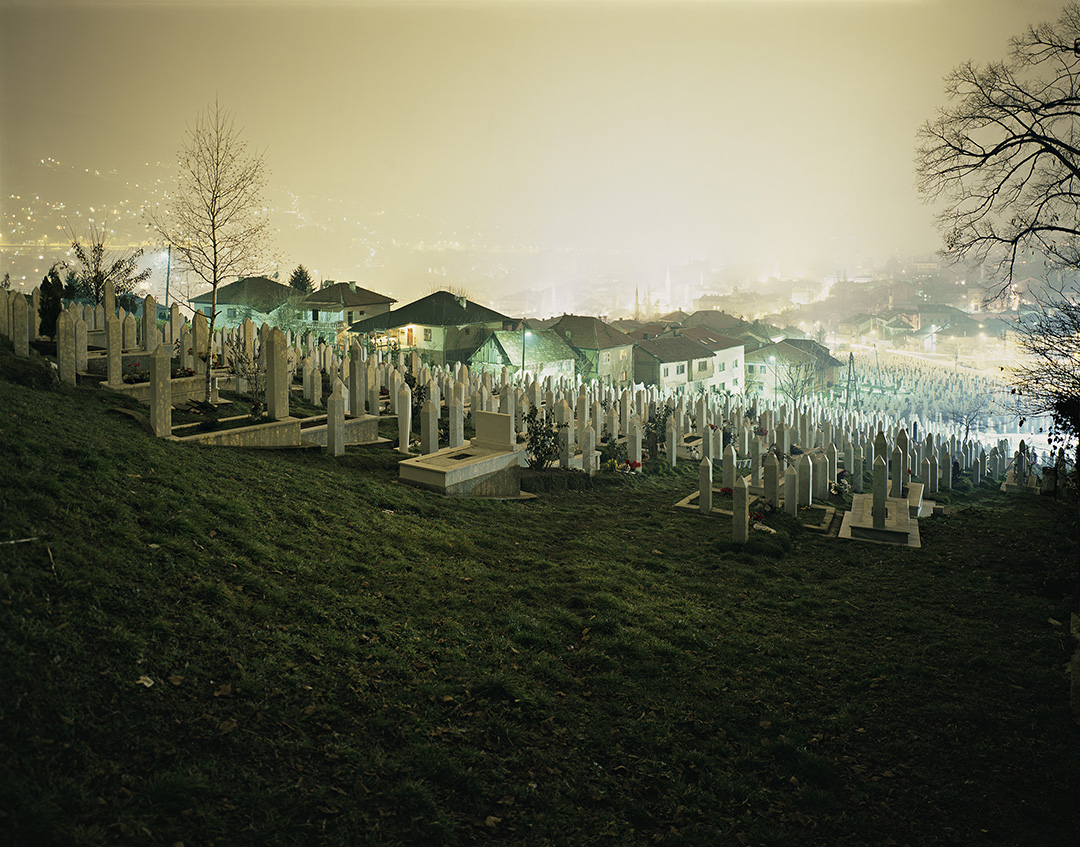
Primož Bizjak, Sarajevo No. 2, 2004. 102 x 128 cm. Courtesy: Primož Bizjak & Gregor Podnar Gallery.
The poet Charles Baudelaire wrote in 1846 that “Romanticism is not precisely defined by the choice of subject or precise truth, but above all by the way of feeling.” This idea founded the concept of emphasising the morality and individuality of the artist and the free-thinking individual, as well as the (colonial) idea of the noble savage. The world inevitably turned in the direction of the Industrial Revolution and scientific thought, and as a result, people became increasingly aware of the meaning and importance of nature, that unspoiled wilderness and untamed living beings. As man decided to systematically catalogue all organic and inorganic entities on earth, with the aim of understanding and ultimately controlling them, there was a reaction from a minority who saw the Industrial Revolution as decay and apocalypse.
The paintings of Caspar David Friedrich or William Turner have therefore always glorified unpredictable and monumental nature, in comparison with which man has always seemed completely insignificant and unimportant. Even nowadays, it is possible to feel the power of earthly processes and elements, which every now and then warn that, despite centuries of progress, man has still not completely overcome nature. This is precisely what many thinkers in modern times write about the Anthropocene, a period in which man left a visible and tangible trace in the environment that can influence natural processes such as weather, climate, atmospheric permeability, or atmospheric content. In his book Hyperobjects: Philosophy and Ecology after the End of the World, Timothy Morton argued for the existence of elementary entities that cannot be fully seen, felt, and embraced, but nevertheless they undoubtedly exist and shape the lives of many inhabitants of the planet. Although without concrete scientific evidence, the Romantics were right in many respects two hundred years ago when they warned of the irreversible consequences of man’s interference with wild nature.
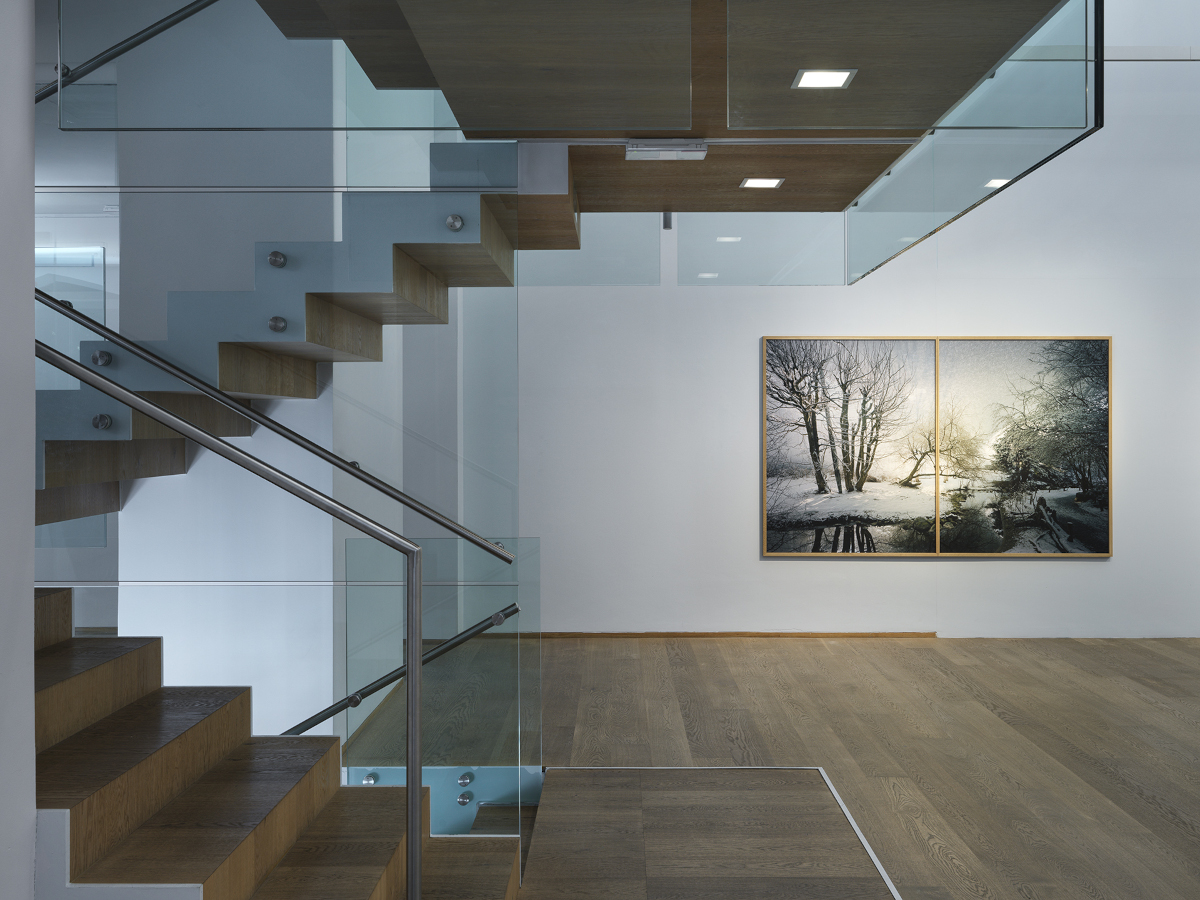
Primož Bizjak: The Grey World is Blue and Green, exhibition view, 2025. City Gallery of Piran. Photo: Jaka Babnik, archive Obalne galerije.
Bizjak’s photographs can also be read and understood in this undertone. Although at first glance he photographs fairly everyday motifs, due to his well-considered formal approaches, they often appear pompous, sublime, and monumental, as they can evoke a sense of awe. In his works, he establishes a certain atmosphere that is fundamentally subjective, even if the photographs are made, in technical terms, in a completely objectivist spirit; they simply depict a state of affairs in the field. Despite the photographic invasion of reality, his works can also be understood as a transfer of the idea of Romantic painting into a contemporary context. The distinctive melancholy that characterises many of his photographs is reminiscent of Romanticism. The artist achieves a sensation of inexplicable melancholy and nostalgia in a distinctly controlled process with strict rules of operation: he usually photographs at night, always using the technical process of long photographic exposure, which eliminates all moving objects and subjects, thereby creating a eerie emptiness of the motifs; he never manipulates the photographs in post-production and never uses artificial lighting. In this way, he records a fragment of reality, just as it is, but with a precisely established atmosphere that hints at meaning and context.
Regardless of the atmospheric nature of his photographs, the recorded spaces themselves provide a certain social and historical context. The audience, whether they want to or not, understands and interprets them through the sieve of their own experiences, expectations, and worldviews, even if the artist himself never explicitly highlights their specific socio-political circumstances. His reasons for such works are, as he says, completely personal, based on everyday situations and his own obsessions. Bizjak primarily emphasises the emotional and subjective component of his creative process, from research and selection of locations, to visiting, observing, and finally photographing, where he does not look so much at the historical and social circumstances of the selected spaces, but especially at his own aesthetic intuition.
Bizjak’s photographs of architectural structures, industrial plants, construction sites, ruined buildings, and nature, which is being eaten up into the artificial urban fabric, can have an uneasy and anxious effect on the audience. Perhaps this is also the artist’s intention. The ambivalence of the meaning of his images is undoubtedly an integral part of his process. In the extremely universal spirit, the audience can rationalise the photographs as scenes of the remains of civilisation, of some kind of collapse or decline, just as Romantic artists interpreted it in their works. Even the current, seemingly indestructible and eternal civilisation will undoubtedly disappear one day, and then today’s completely ordinary and familiar things will become relics of the past. Bizjak’s works therefore depict exactly what will possibly be left behind. This is probably one of the reasons for the prevailing atmosphere of melancholy, ambiguity, and ambivalence.
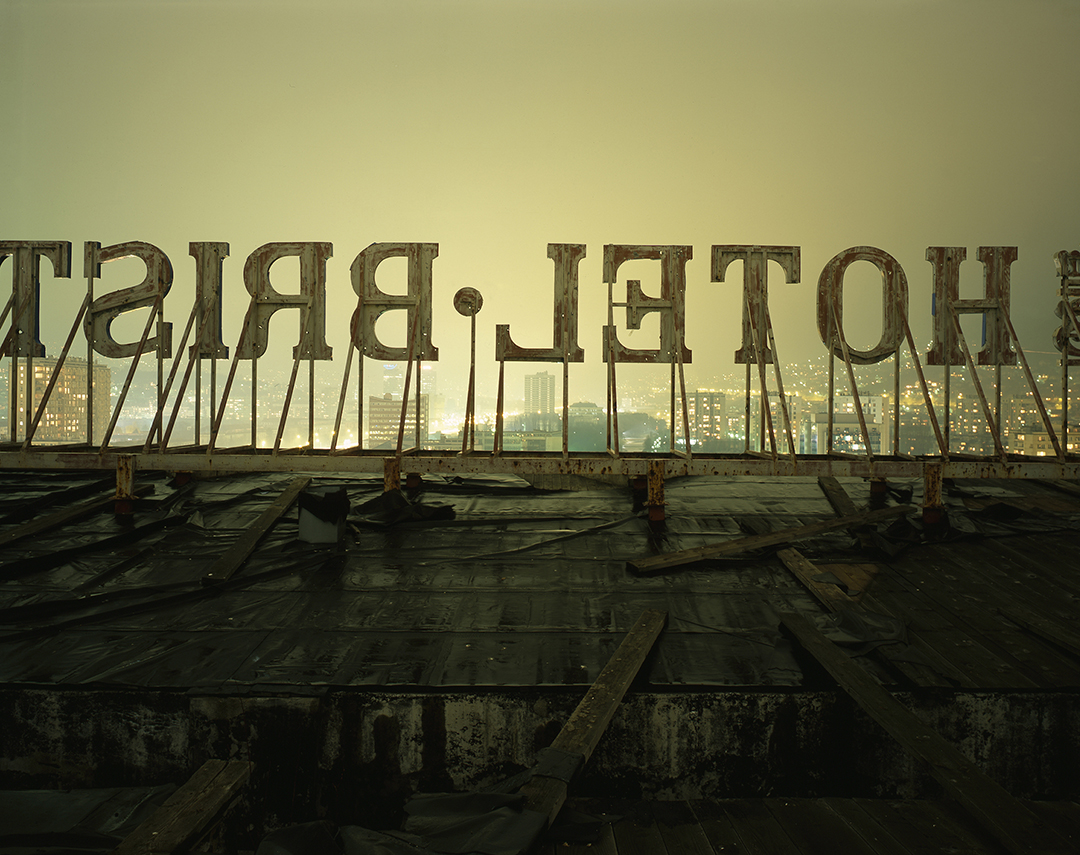
Primož Bizjak, Sarajevo, Hotel Bristol, 2004. 150 x 188 cm. Courtesy: Primož Bizjak & Gregor Podnar Gallery.
The current exhibition at the Piran Coastal Galleries, entitled The Grey World is Blue and Green, presents a cross-section of Primož Bizjak’s work between 2004 and 2020, when several extensive and long-term cycles were made. Nine large-format photographs in the dimensions of monumental painting are showcased. Two photographs are from the Sarajevo series, where he captured images of spaces that, with their essence and name, naturally determine their historical and political context. The work Hotel Bristol (2004) acts as a highly stylised film still of a certain decay, where a mirror-inverted advertising sign dominates in the foreground, and the penetrating light of the city shines in the background. During the devastating civil war in Bosnia and Herzegovina, the hotel stood on the very front line and became one of the symbols of the destruction caused by armed conflict. The anxious image establishes an atmosphere that testifies to the universal horrors of war, where there are no winners, only victims. The latter is shown much more explicitly in the photograph Sarajevo, No. 2 (2004), which represents the change of purpose of a former suburban public space into an improvised cemetery.
Almost simultaneously, he worked on the long-term piece Venezia, which represents the city in which he lived and worked at the time, which is why he knew it extremely well. His challenge was to depict one of the most photographed and massively visited cities in the world in his own, authentic, and distinctly personal way. He photographed those places in Venice that most often remain hidden from the general public and the countless tourists who walk through the city in search of an authentic experience. He depicted the peripheral areas of the city, its military fortifications and industrial buildings, all of which belong to the past. He recorded the historical layers of the city in a distinctly melancholic and almost nostalgic way, as the presence of man in his images is only indicated by his or her complete absence. His images are perhaps reminiscent in their atmosphere of the photographs of Eugene Atget, who photographed the streets of Paris in the early 20th century, which was inevitably changing at that time. Venice, on the other hand, has not changed significantly in the recent past, remaining roughly as it was depicted by Canaletto in his paintings with the help of a camera obscura, but despite this, gentrification and touristification are inexorably transforming it into a resort for curious visitors who want to enjoy a piece of centuries-old untouched history.
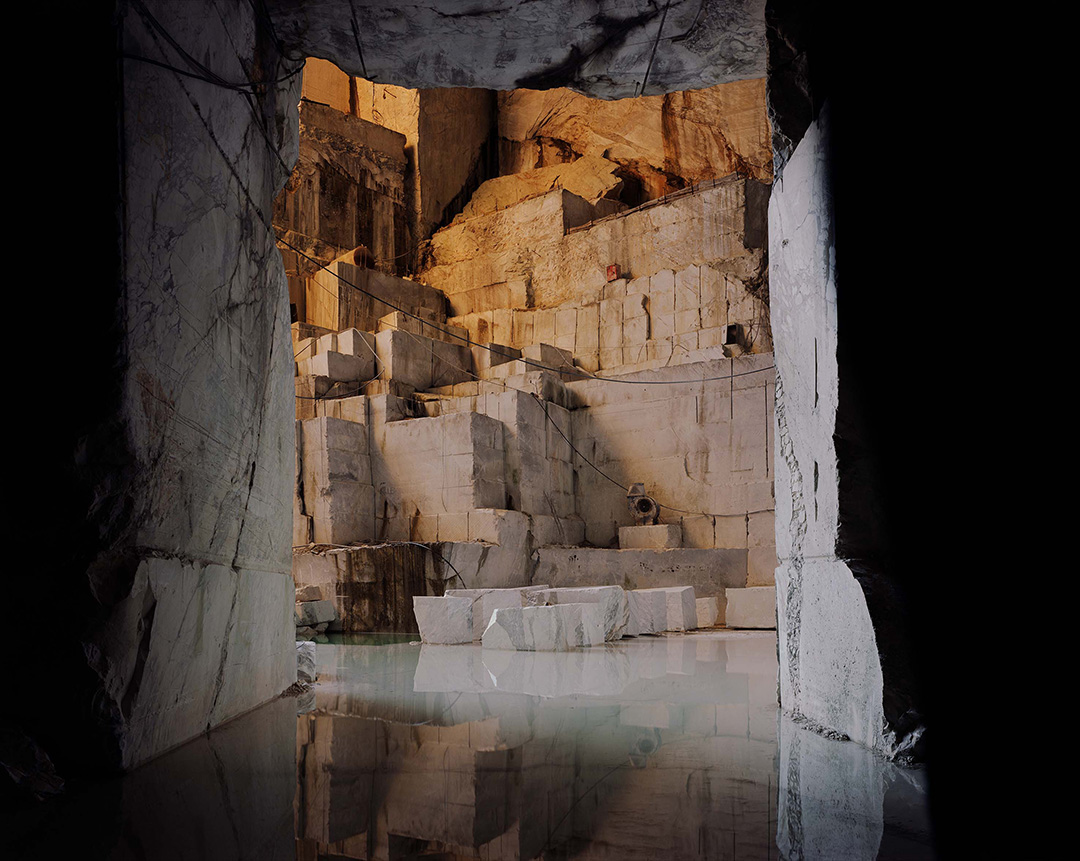
Primož Bizjak, Antro del Corchia, Alpi Apuane, 2015. 125 x 157 cm. Courtesy: Primož Bizjak & Gregor Podnar Gallery.
In a similar way of documenting human presence in the environment, he photographed selected locations in the series Alpi Apuane. These are images of quarries where the extremely valuable and popular marble is mined and cut, from which numerous iconic sculptures and monuments are created and with which numerous houses and gardens are furnished. On the one hand, the photographs show the explicit result of the brutal transformation of the geological structure of the earth, and on the other, idyllic spaces of peace. The images therefore appear distinctly enigmatic, sublime, and eerie at the same time. The clearly cut structures of stones and rocks introduce an almost apocalyptic atmosphere, where artificial human intervention and spontaneous natural growth meet. It is difficult to predict whether the aforementioned quarries are active or abandoned. Despite the fact that the audience is confronted with permanent wounds in the earth, these spaces can also seem almost attractive, as they are homely and morbid at the same time. Rocks carry within them an immeasurably long historical record, which man has excavated, cut up, and used for his own benefit, pleasure, and vanity.
In the Munich Zoo series, the undertones can be perceived and felt in a fairly similar light, even if in this case Bizjak has captured images of artificially created wilderness within a controlled urban environment. In this case, the very meaning of the zoo is key, which is inextricably linked to the era of enlightenment and the rise of scientific thought, when people began to discover untouched corners of the world, climb mountain peaks, and statistically record flora and fauna. The zoo provided people in Europe, that dominated the world at the time, with a new experience, as most of the people would never have had the opportunity to see exotic wild animals in their lives. The zoo is also a reflection of the human desire to control the natural environment and a reminder of the period when unbalanced technological progress led to colonialism and the associated racial theories of superior and inferior species. In imperial superpowers, people from newly occupied territories were also exhibited in zoos.

Primož Bizjak, Munich Zoo n4, 2017-2020. 157 x 250 cm. Courtesy: Primož Bizjak & Gregor Podnar Gallery.
The photograph Munich Zoo, no 4 (2017-2020) can be perceived as an overly idealised image of the wild nature like the pictures that 19th-century photographers sought in the newly settled areas of the American West, from which they had previously had to expel the natives. Photographers such as Carleton E. Watkins, Eadwaerd Muybridge, and Charles Weed competed to find and occupy vantage points that would allow them to capture the appropriate views and photographic compositions. In contrast to the idyllic nature of the photograph, which depicts a small wilderness in a winter landscape, artificial-seeming light shines in its background; perhaps this is a reminder of the urbanised modern world that has forced man to re-revere nature. On the other hand, for the artist, these images represent a completely different subjective story of migration, belonging, and identity.
References to the principles of Romantic painting or pioneering photography of the modern world are also quite common in the field of contemporary photography, as many photographers on a global level use such historical references and make monumental dimensions of photographs. Regardless of contemporary photographic production, Bizjak is forging his own path with his practice, in which reflection on passing is often a key connecting element in his body of work. The transience of man and everything earthly is an undeniable fact, which civilisation often rationalises into fear of the end and into nostalgia, which is perhaps why some images of the past and visions of the future appear so dark and terrifying in a visual sense. In this light, it is also possible to read and understand the photographs presented here, which easily evoke – always culturally conditioned – feelings of gloom, solitude, and silence. The artist himself undoubtedly sees them differently, but the audience is not in a completely equal position, as they can only enjoy a selected excerpt of his process and his reality. This is precisely one of the central focuses of his practice: just as a painter stylises and manipulates a painting to his will, Bizjak carefully and thoughtfully chooses a perspective for his photographs that best reflects his artistic aspirations.
© Miha Colner, April 2025
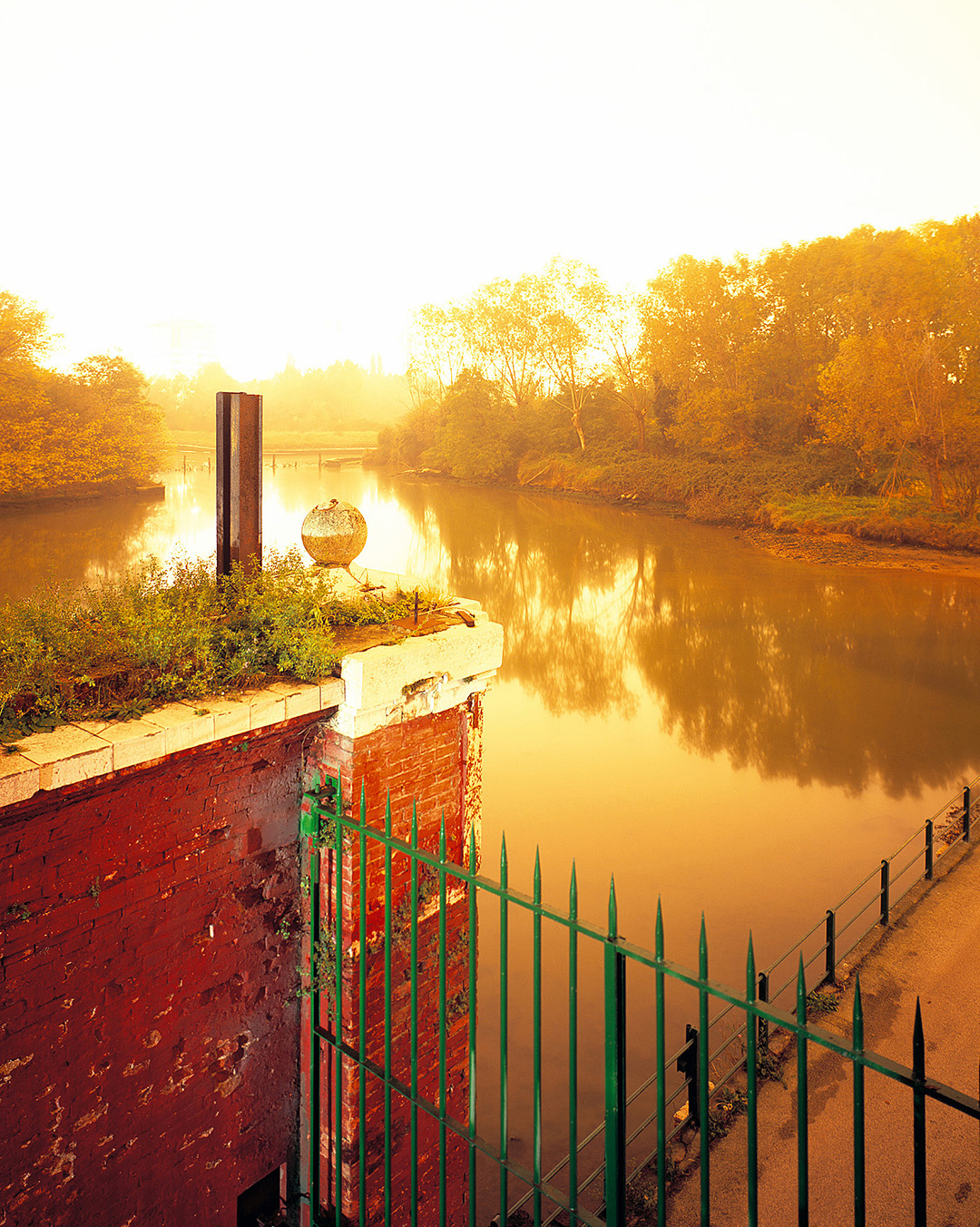
Primož Bizjak, Forte Marghera n5, 2006. 157 x 125 cm. Courtesy: Primož Bizjak & Gregor Podnar Gallery.